
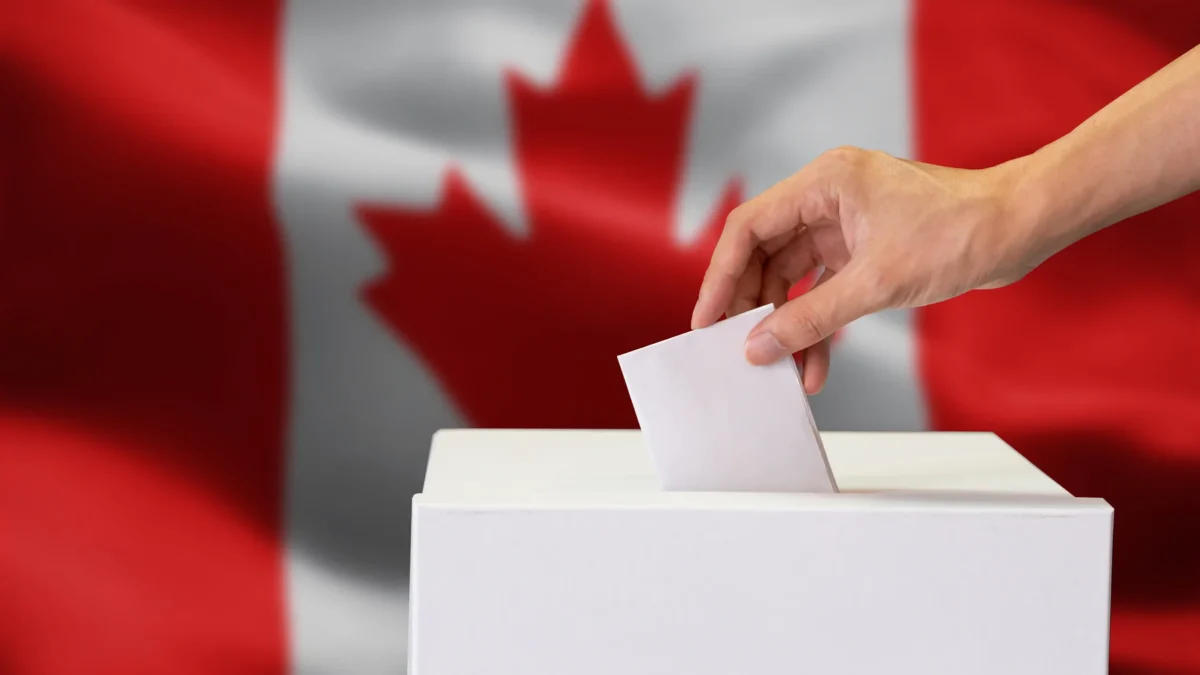
On Monday, October 26, 2026, voters across Durham Region will elect the mayors, councillors and school board trustees who will serve for the next four years. Municipal elections usually get less attention than federal or provincial ones. For homeowners, though, many of the decisions that show up closest to home are made locally: the property tax bill, the permit needed for a renovation, and how a neighbourhood grows and changes.
This article is strictly non-partisan. It does not discuss, compare or recommend any candidate. Its purpose is to explain how local government works in Durham Region, what is different in 2026, and where to find official voting information.
Two levels of local government
Durham Region has a two-tier system. The Regional Municipality of Durham delivers some services across the whole region, and eight local municipalities (Ajax, Brock, Clarington, Oshawa, Pickering, Scugog, Uxbridge and Whitby) deliver others. Both matter to homeowners, and knowing which one handles what makes it easier to ask the right question of the right council.
| Mainly the Region of Durham | Mainly your local municipality |
|---|---|
| Drinking water and sewage treatment | Issuing and collecting your property tax bill |
| Regional roads | Local streets (roads that are not Regional roads) |
| Durham Region Transit | Building permits and zoning |
| Police, paramedics and public health | Parks, trails, recreation and libraries |
| Affordable housing, long-term care and child care | Fire protection and by-law enforcement |
| Waste management (Oshawa and Whitby handle their own garbage collection) | Running the municipal election |
Source: Region of Durham, Local Municipalities and Departments pages. Some services are shared or vary by municipality; the Region’s A to Z service listing is the best place to check a specific service.
Where local decisions show up for homeowners
Property taxes
A Durham property tax bill combines three parts: your local municipality’s taxes, the Region’s taxes and provincial education taxes. Your local municipality issues and collects the whole bill. Your property taxes are based on your property’s assessed value, determined by the Municipal Property Assessment Corporation (MPAC), and the applicable tax rates.
The local and regional rates come out of budgets approved by the councils elected this fall. The education rate is set by the province. So when a council debates its budget, the service levels and investments it chooses are what ultimately shape the local and regional parts of your bill.
Housing, development and neighbourhood planning
This is one of the biggest recent changes. As of January 1, 2025, the Region of Durham no longer has planning responsibilities under provincial rules. The Regional Official Plan (Envision Durham) became part of each local municipality’s official plan, and each local council now has responsibility for it within its own boundaries.
For homeowners, that means your local council is where decisions are made on official plans, zoning and many development applications. Those decisions help shape what can be built in your neighbourhood, where new housing and density go, and how areas near transit and main roads change over time.
Development charges are another link to housing. Both the Region and local municipalities collect development charges on new construction to help pay for growth-related infrastructure such as roads, water and wastewater systems, and transit. They are one of the costs built into new homes.
Infrastructure, roads and transit
Water and sewer capacity, the Regional road network and Durham Region Transit are regional responsibilities. They affect where growth can happen, how busy major roads get, and how easy it is to get around without a car. Local streets, parks and trails are generally local. If a concern is about a specific road, it helps to check first whether it is a Regional road or a local one.
Permits and everyday services
If you plan to finish a basement, build a deck or add a unit, the building permit comes from your local municipality. The City of Pickering, for example, issues permits for submissions that meet zoning standards, the Ontario Building Code and other agencies’ requirements. Local councils also oversee services homeowners use every week, including parks, recreation, libraries, fire protection and by-law enforcement.
What is different in 2026: the Regional Chair
In past elections, Durham voters also elected a Regional Chair. That position is not on the 2026 ballot.
The Better Regional Governance Act, 2026 (Bill 100) received Royal Assent on May 7, 2026. It allows the Minister of Municipal Affairs and Housing to appoint the head of council for Durham Region and seven other upper-tier municipalities after the 2026 election and each regular election after that. If the Minister does not make an appointment, the Regional Council selects its head at its first meeting after the election.
What stays the same: regional councillors are still elected by voters, and the new council term begins on November 15, 2026.
Before you vote: registration and official information
- Who can vote: Canadian citizens aged 18 or older who live in the municipality, or who own or rent property there (a non-resident owner’s or tenant’s spouse may also qualify).
- Check the voters’ list: the list is prepared from Elections Ontario’s Permanent Register of Electors. Since September 1, 2026, additions and changes are made through your municipal clerk, up to the close of voting on October 26.
- Bring ID: you will need identification showing your name and address. Photo ID is not required.
- Can’t vote in person? You can appoint a proxy to vote on your behalf.
- Dates, places and voting methods: each municipality runs its own election, so advance voting days, voting locations and voting methods vary. Check your local municipality’s election page. The Region of Durham’s election page links to all eight, and the Province of Ontario’s voters’ guide covers eligibility, ID and proxy voting.
TMG Perspective
From a homeowner’s point of view, local government is less about headlines and more about the details that add up over time: the tax bill, the permit timeline, the zoning on the lot next door, the water and road capacity that decides where growth goes. The 2025 planning change moved more of those decisions to local councils, so the council you elect this fall will have a direct role in how Durham’s neighbourhoods evolve.
Whoever you support, it helps to know which council handles which issue, to read official information, and to attend an all-candidates meeting if one is held in your area.
Questions about how local decisions could affect your home?
If you are thinking about buying, selling or renovating in Durham Region and want to understand how zoning, development or property taxes could factor in, I am happy to talk it through, no obligation.
Julie Marticorena, REALTOR®
The Marticorena Group | LPT Realty, Brokerage
julie@themarticorenagroup.com | (416) 526-3786 | https://themarticorenagroup.ca
Related reading: Whitby GO Transit-Oriented Community: What’s Proposed and What Happens Next. More local coverage in our Local & Community archive.
About this article. Election dates, eligibility, voters’ list and ID information are from the Region of Durham’s Municipal Elections page and the Province of Ontario’s 2026 municipal elections guidance. The Regional Chair change is from Bill 100, the Better Regional Governance Act, 2026 (Legislative Assembly of Ontario). Service, planning, property tax and development charge information is from the Region of Durham and the City of Pickering. This article is non-partisan general information. The Marticorena Group does not endorse any candidate.
About the author. Julie Marticorena is a REALTOR® with The Marticorena Group serving Durham Region and the Greater Toronto Area. With more than 15 years of experience in financial services and a background in strategic planning, negotiation, and project management, Julie brings an analytical and organized approach to real estate. She focuses on education, transparency, and personalized guidance, helping buyers, sellers, and investors make informed real estate decisions with confidence. Julie is fluent in English and Spanish.